

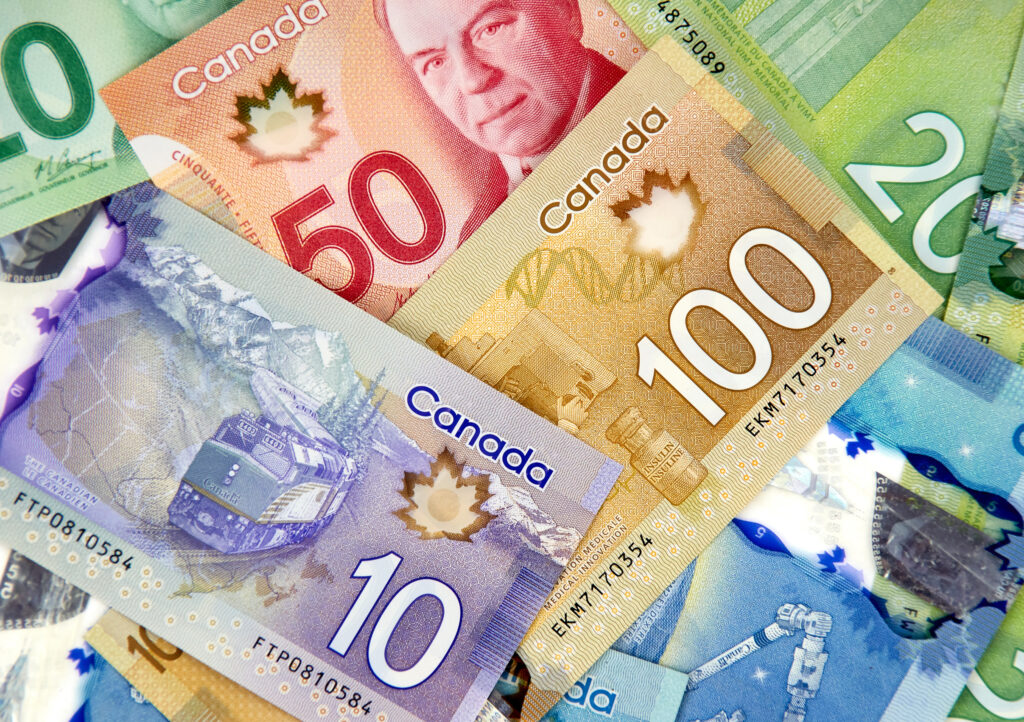
Counterfeit Canadian Banknotes
The Canadian dollar is the currency of Canada. It is abbreviated with the dollar sign $. There is no standard disambiguating form, but the abbreviations Can$, CA$ and C$ are frequently use for distinction from other dollar-denominated currencies. It is divide into 100 cents.
The Canadian Dollar is often referred to as ‘The Loonie’, because of the loon bird that draws the attention on the $1 Canadian coin. The CAD is the 7th most commonly traded currency in the world, and can be denoted with either a traditional ‘$’ sign, or ‘C$’ to differentiate it from other Dollar-based currencies.
It pays to check
Checking bank notes protects everyone, so don’t be annoy if a cashier carefully examines your bills. Routinely checking the security features of all notes – large and small – allows cashiers to intercept counterfeits and keep them out of the till and out of your change.
Security features are helpful only if you use them. To fight counterfeiting, the Bank offers free training materials to help the public, businesses, and police agencies use the security features in genuine bank notes. If you know your notes, you’ll be able to detect a counterfeit at a glance and protect yourself from fraud.
The impact of counterfeiting on Canadians
Any individual who, knowingly or not, accepts a counterfeit bears the loss. In other words, there’s no reimbursement. It’s the same in any country. In Canada, it is a criminal offence to knowingly use or keep counterfeit money.
Financial loss
The financial loss from a counterfeit note can be significant for individuals and businesses alike. Whether it’s a small or large business, the loss incurred from accepting a single counterfeit $100 note can affect a day’s profits or lead to increased prices that are ultimately borne by the consumer.


Jay Giubert –
I was able to use these bank notes at the shop without any problems
Darleen Johnson –
The notes were all deposited into my bank account today and I didn’t encounter any rejection at the atm